

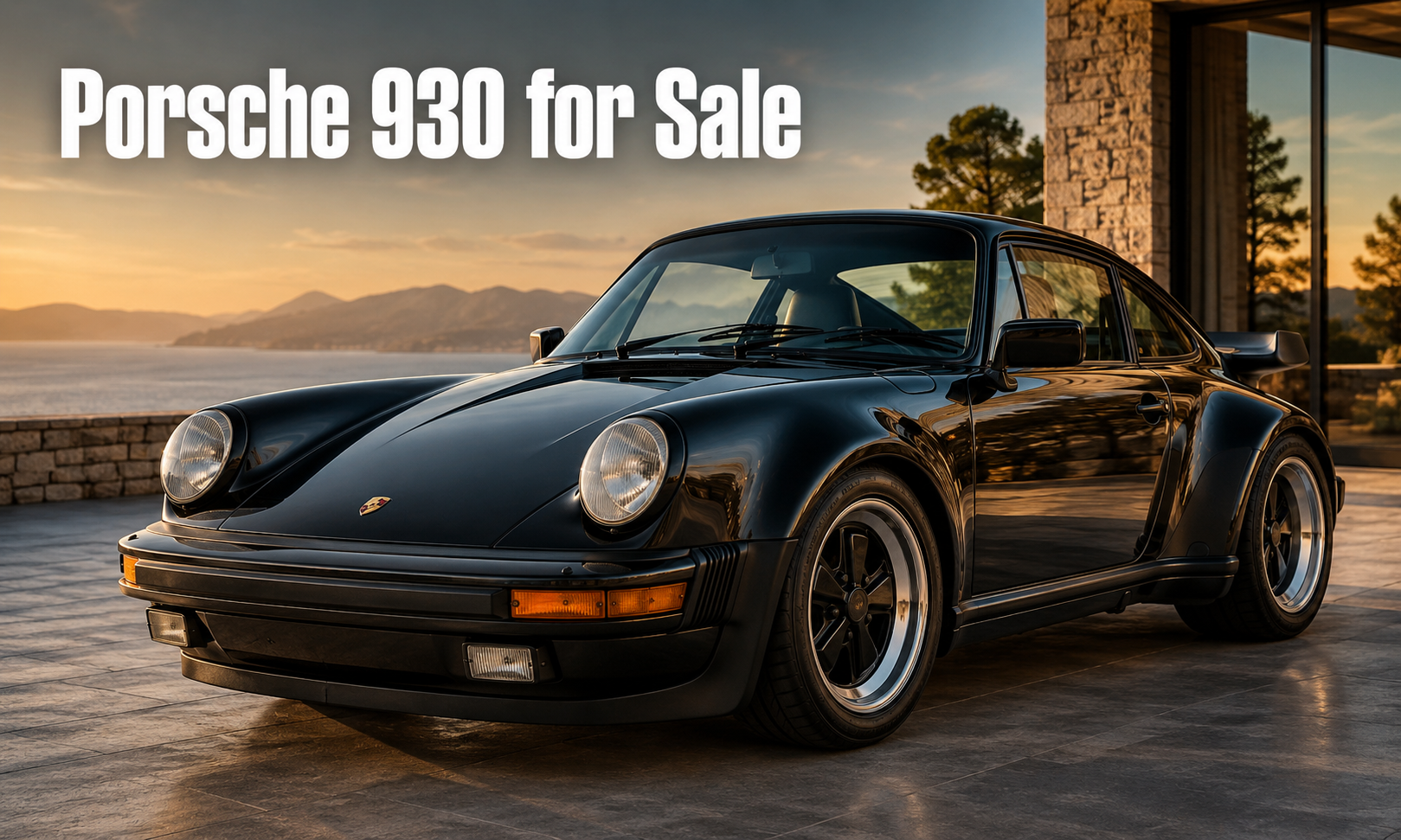
How to value a 1979 Turbo, verify provenance, inspect the engine and body, compare US and European cars, and avoid an expensive collector-car mistake
| Porsche 930 fact | Buyer information |
| Official model name | Porsche 911 Turbo, internally designated Type 930 |
| Production era | 1975 through 1989, with the 3.3-liter version introduced for the late 1970s |
| 1979 US engine | Turbocharged and intercooled 3.3-liter air-cooled flat-six |
| 1979 US output | Commonly listed at 261 horsepower and 291 lb-ft of torque |
| Transmission | Four-speed manual transaxle with rear-wheel drive |
| Defining design | Wide rear fenders, front spoiler, Fuchs wheels, and large rear tea-tray spoiler |
| Working 2026 market range | Roughly $90,000 to $300,000+, with exceptional cars priced higher |
| Featured 2026 result | One-owner 8,000-mile 1979 example sold for $250,000 |
| Most important inspection | Provenance, matching numbers, body repair, compression, leakdown, fuel system, turbo system, brakes, tires, and service records |
Key Takeaways
- Condition and provenance matter more than mileage alone. A poorly stored low-mileage car can need more work than a regularly driven example.
- Recent 1979 auction outcomes have ranged from under $100,000 to $250,000, showing how originality and documentation reshape value.
- US-market and Rest-of-World cars have different specifications, power ratings, emissions equipment, and import considerations.
- A Porsche-specialist pre-purchase inspection with compression and leakdown testing is essential before purchase.
- Old tires, deferred fuel-system work, hidden body repairs, and engine leaks can turn a seemingly attractive deal into a six-figure restoration.
A Porsche 930 for sale can range from a modified driver in the low six figures to a highly original collector car worth several times as much. The badge and model year are only the beginning. Chassis identity, engine and transmission numbers, factory colors, ownership history, body integrity, mechanical condition, and the quality of previous work determine whether the asking price is realistic.
The 1979 model is especially desirable because it combines the larger intercooled 3.3-liter engine with the dramatic four-speed driving experience that defined the early Turbo era. It is also old enough that every purchase should be treated as a collector-car transaction rather than a normal used-car sale.
| The quick answer
Expect approximately $140,000 to $210,000 for a strong driver, $200,000 to $300,000 for a highly original or excellent restored example, and more for exceptional mileage, colors, documentation, or provenance. Cars below those ranges may still be good purchases, but the inspection must explain the discount. |
What the Featured 1979 Auction Tells Buyers
The supplied Car and Driver feature on the one-owner 1979 Porsche 930 Turbo described a Silver Metallic car with Cork leather, approximately 8,000 miles, a four-speed manual, limited-slip differential, original window sticker, and unusually complete ownership history. The article noted that it was one of the last 50 examples sent to the United States and had an original list price of $44,669.
The completed Bring a Trailer auction result shows that the car sold for $250,000 after 24 bids. That result is useful because it demonstrates the premium buyers place on one-owner history, low mileage, original documentation, and a specification that has not been heavily altered.
The sale does not mean every 1979 Turbo is worth $250,000. A similar-looking car with repaint history, a replacement engine, incomplete records, corrosion, an old restoration, or extensive modifications may trade far below that number. Collector values are built from the details, not the silhouette alone.
What Does Porsche 930 Mean?
The 930 is Porsche’s internal designation for the first-generation production 911 Turbo. Porsche introduced the original 3.0-liter Turbo in the mid-1970s after developing turbocharging in motorsport. The 3.3-liter version followed with an intercooler, wider bodywork, stronger brakes, and the large rear spoiler that became one of the most recognizable Porsche shapes.
The 930 remained part of the second-generation 911, often called the G-Series. Its rear-engine layout, abrupt boost delivery, four-speed gearbox, and lack of modern electronic safety systems give it a driving character that is very different from a current 911 Turbo.
How Much Should You Pay in 2026?
The following ranges are editorial shopping estimates based on recent auction activity and current advertised inventory. They are not formal appraisals. A rare color, matching-numbers drivetrain, documented restoration, factory options, market specification, or significant flaw can move a car outside the range.
| Condition tier | Working price range | Typical characteristics | Main caution |
| Project or heavily modified | $90,000 to $140,000 | Needs restoration, incomplete history, non-original drivetrain, or extensive modifications | Repair cost can exceed the purchase discount |
| Usable driver | $140,000 to $210,000 | Good mechanical condition, visible wear, some paintwork, usable records | Check quality of previous repairs |
| High-quality original or restored | $200,000 to $300,000 | Strong provenance, correct specification, detailed service, excellent presentation | Verify originality rather than trusting descriptions |
| Exceptional collector example | $300,000 to $400,000+ | Ultra-low mileage, rare options, exceptional history, dealer or concours presentation | Asking prices can exceed completed-sale value |
Recent 2026 auction results for 1979 examples have shown the market stretching from below $100,000 for cars with significant compromises to $200,000 or more for well-presented examples. The $250,000 one-owner result sits near the upper end of completed public sales, while exceptional dealer inventory may be advertised even higher.
US-Market Versus Rest-of-World Cars
US-market 1979 cars are commonly listed around 261 to 265 horsepower, while European versions are often quoted at 300 PS. Emissions equipment, bumpers, lighting, gauges, and final specification can differ. A European car may feel stronger and look cleaner, but import history and state registration can add complexity.
| Comparison point | US-market car | Rest-of-World car |
| Power rating | Approximately 261 to 265 hp in common listings | Approximately 300 PS in European specification |
| Emissions equipment | US federal equipment and documentation | May have been altered during import compliance |
| Instruments and trim | US speedometer, bumpers, and lighting | European gauges, bumpers, and market details |
| Registration risk | Usually simpler with continuous US history | Confirm import papers, title chain, and state emissions rules |
| Collector appeal | Strong when original and documented | Strong when properly imported and correct |
Neither version is automatically the better purchase. A documented US car with original emissions equipment may be more valuable to one buyer, while another may prefer the stronger European specification. The condition and legality of the individual car remain more important than broad market labels.
Authenticity Checks That Protect Value
- Confirm the chassis number and compare the engine and transmission numbers with Porsche documentation.
- Verify the factory exterior color, interior color, options, delivery market, and original selling dealer when records exist.
- Inspect the rear fenders, spoilers, bumpers, Fuchs wheels, glass, lights, and interior trim for correct-period parts.
- Review the original window sticker, books, tool kit, compressor, spare wheel, invoices, photographs, and ownership chain.
- Check whether the odometer was replaced or repaired and whether records support the stated mileage.
- Document all upgrades, including K27 turbochargers, exhausts, intercoolers, transmissions, suspension changes, and brake conversions.
Modifications are not automatically bad. A sympathetic engine rebuild, improved air conditioning, modern ignition, upgraded chain tensioners, or carefully selected tires may make the car more usable. The question is whether the work is documented, reversible, professionally completed, and reflected honestly in the price.
Mechanical and Body Inspection Checklist
| Area | What to inspect | Why it matters |
| Engine | Cold start, smoke, oil pressure, oil leaks, head studs, compression, and leakdown | Major engine work can exceed $40,000 to $60,000 |
| Turbo and fuel system | Boost delivery, wastegate, intercooler seals, CIS injection, pumps, hoses, and fuel lines | Age and heat make neglected fuel systems dangerous |
| Four-speed gearbox | Synchros, clutch, differential noise, mounts, leaks, and shift quality | Rebuilds are specialized and expensive |
| Body | Windshield and rear-window surrounds, rockers, battery areas, floors, flares, panel gaps, and paint depth | Galvanizing reduces rust but does not prevent it |
| Suspension and brakes | Bushings, shocks, wheel bearings, calipers, hoses, rotors, and alignment | The 930 needs predictable chassis behavior |
| Wheels and tires | Correct Fuchs, cracks, date codes, matching sizes, and damage | Old tires are unsafe regardless of tread depth |
| Electrical and climate | Gauges, lights, windows, sunroof, blower motors, and air conditioning | Small faults can require time-consuming specialist work |
| A pre-purchase inspection is not optional
Use a shop with air-cooled 911 Turbo experience, not only general European-car experience. Request compression and leakdown numbers, underside photographs, a paint-depth map, fluid-leak assessment, and a written estimate for every immediate repair. |
What Is a 930 Like to Drive?
The four-speed gearbox uses long ratios, and the engine can feel calm before the turbocharger comes alive. When boost arrives, acceleration builds rapidly. The rear-engine balance, narrow front tires, old-school steering, and lack of ABS, traction control, or stability control demand deliberate inputs.
Modern tires are one of the most important safety upgrades. The featured auction car still wore 1979-dated tires, making replacement necessary before meaningful driving. A collector should preserve the original tires for display while fitting correct-size modern rubber for road use.
A 930 is not the ideal first classic sports car for every buyer. It suits an experienced driver who understands throttle management, warm-up and cool-down habits, air-cooled oil checks, and the difference between preserving originality and neglecting maintenance.
Auction, Dealer, or Private Sale?
| Sale type | Advantage | Risk | Best practice |
| Online auction | Large audience, photos, comments, and public bidding | Limited test drive and emotional bidding | Set a maximum including fee, tax, and transport |
| Specialist dealer | Easier inspection, financing, and trade options | Higher asking price and presentation markup | Compare completed sales and request written warranty terms |
| Private seller | More time with owner and records | Title, payment, and disclosure risk | Use escrow, verify identity, and inspect before payment |
Budget beyond the purchase price for sales tax, enclosed transport, insurance, immediate service, tires, battery, fluids, registration, storage, and a reserve for unexpected repairs. Even a correctly purchased 930 should not consume the buyer’s entire collector-car budget.
Frequently Asked Questions
How much is a Porsche 930 worth?
A usable car may begin around the low-to-mid six figures, while excellent documented examples commonly exceed $200,000. Exceptional cars can be worth substantially more.
Why are 1979 Porsche 930s valuable?
They combine the intercooled 3.3-liter engine, wide-body styling, four-speed gearbox, air-cooled character, and historical importance as an early production supercar.
Is a European 930 better than a US car?
It may have more power and different trim, but import documentation, emissions compliance, originality, and condition determine whether it is the better purchase.
Are modified 930s worth less?
Not always. Period RUF parts and high-quality upgrades can be valuable, but originality usually commands the strongest collector premium.
Can a 930 be driven regularly?
Yes, when maintained properly and fitted with safe tires. It still requires more attention, skill, and warm-up discipline than a modern 911.
What is the biggest buying mistake?
Paying an originality-level price without confirming numbers, history, body integrity, mechanical condition, and the true cost of deferred service.
Final Verdict
The Porsche 930 market rewards documentation, authenticity, and condition more heavily than a simple mileage number. The $250,000 one-owner 1979 sale shows what buyers will pay for an unusually complete story, but it should not be used as a blanket value for every car.
Build a shortlist by specification and provenance, then let a specialist inspection determine the real price. The best purchase is not always the cheapest or most original car. It is the 930 whose history, condition, driving character, and repair budget match the way the next owner intends to use it.
