Category: Cars

  • 2026 Infiniti QX50: Why There Is No New Model and What to Buy Instead

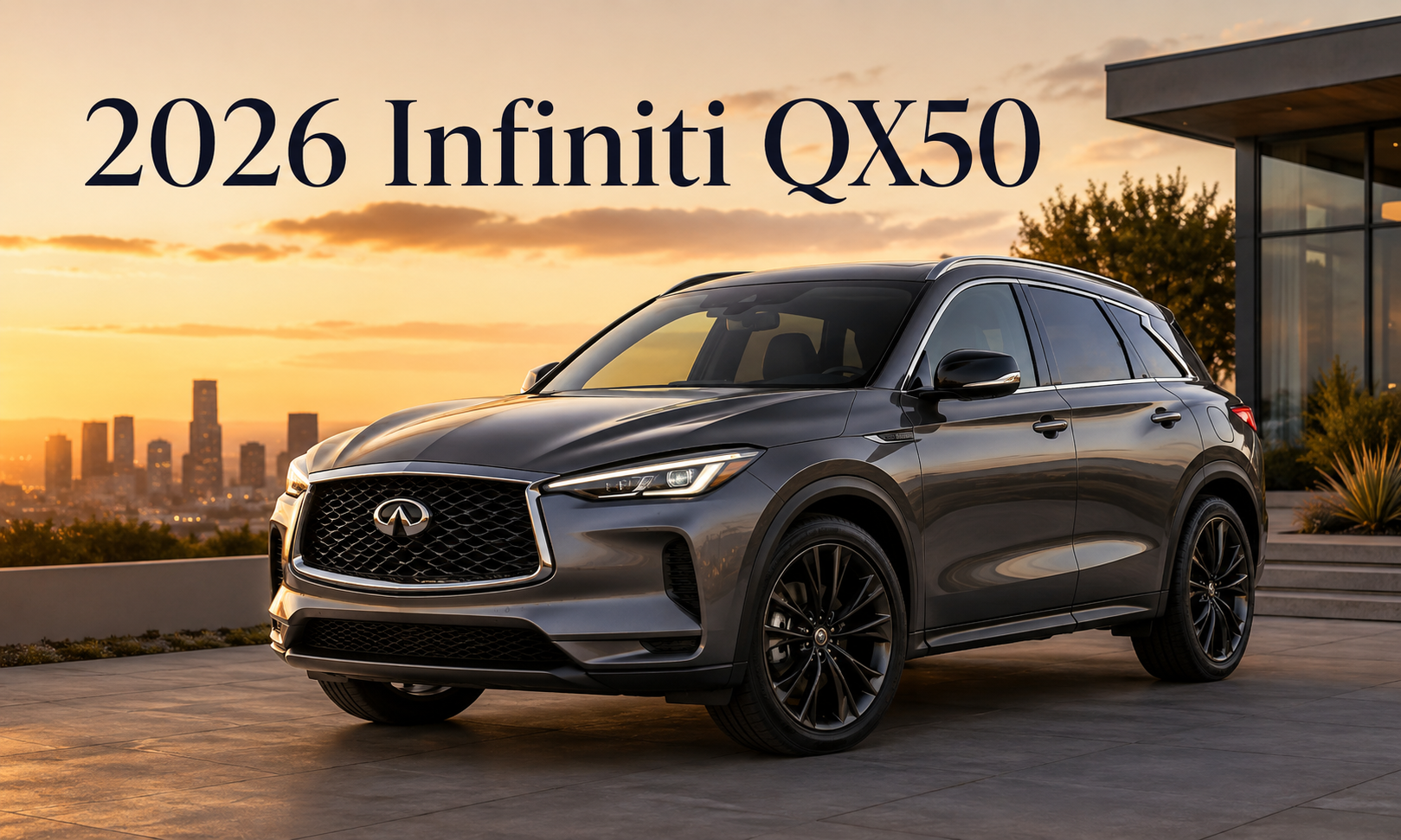
    2026 Infiniti QX50: Why There Is No New Model and What to Buy Instead

    A U.S. guide to the QX50’s discontinuation, leftover 2025 inventory, used-car value, specifications, and replacement options

    Shoppers searching for a 2026 Infiniti QX50 should know that Infiniti did not produce one. The compact luxury crossover ended after the 2025 model year, along with the coupe-styled QX55. Any QX50 advertised as new during 2026 is leftover 2025 inventory, not a 2026 model.

    That distinction matters when comparing price, warranty coverage, financing, depreciation, and alternatives. A remaining 2025 QX50 can still be a reasonable purchase if the discount is strong, but buyers should not pay new-model money for a vehicle that has already left production. Infiniti’s current strategy shifts attention toward the larger QX60, full-size QX80, and the new two-row QX65.

    Key Takeaways

    There is no factory-built 2026 Infiniti QX50 because Infiniti discontinued the model after 2025.

    Remaining new inventory carries a 2025 VIN and model year, even when sold or first registered during 2026.

    The final QX50 used a 268-hp VC-Turbo four-cylinder, a continuously variable transmission, standard all-wheel drive, and a 25-mpg combined rating.

    Its strongest qualities were ride comfort, cabin space, sliding rear seats, and competitive luxury pricing.

    Its main weaknesses were coarse engine sound, merely average acceleration, disappointing real-world efficiency, and an aging infotainment layout.

    A discounted leftover QX50 may offer value, but the QX60, 2027 QX65, and competing compact luxury SUVs deserve comparison.

    Was the Infiniti QX50 Discontinued for 2026?

    Yes. Infiniti confirmed that QX50 production would end after the 2025 model year. The brand’s official discontinued-model page now identifies 2025 as the final year, while the reference report states that Infiniti planned to build enough vehicles to support dealer supply into 2026.

    The official Infiniti QX50 archive confirms that the second-generation model was offered through 2025. It also preserves specifications and owner resources for drivers who already have a QX50.

    Question Answer
    Is there a 2026 QX50 model year? No
    What was the final model year? 2025
    Can a dealer still sell a new QX50 in 2026? Yes, if unsold 2025 inventory remains
    Will the title say 2026? No, the VIN and window sticker identify it as a 2025 model
    Was the QX55 also discontinued? Yes, after the 2025 model year
    Is the QX65 a direct QX50 replacement? Not exactly. It is a larger, midsize two-row crossover

    Why Did Infiniti End the QX50?

    Infiniti did not identify one single mechanical defect as the reason for discontinuation. The decision fits a broader effort to simplify the lineup and redirect investment toward newer products. Although the QX50 was one of Infiniti’s better-selling vehicles, it competed in a crowded class and had fallen behind recently redesigned rivals in technology, performance, efficiency, and perceived value.

    The QX50’s variable-compression engine was technically ambitious, but its real-world advantages were difficult for many buyers to feel. Acceleration was acceptable rather than exciting, the continuously variable transmission could hold the engine at noisy speeds, and fuel economy did not create a clear lead over conventional competitors.

    The model also faced a product-age problem. Its second generation arrived for 2019, and by the final model year, several competitors offered newer cabin technology, hybrid options, stronger performance, or more polished infotainment systems.

    What Were the Final 2025 QX50 Price and Specifications?

    The final 2025 lineup had a published MSRP range of approximately $44,350 to $52,550 before destination charges, taxes, registration, dealer fees, and options. All-wheel drive became standard across the remaining trims.

    Specification Final 2025 Infiniti QX50
    Engine 2.0-liter variable-compression turbocharged four-cylinder
    Horsepower 268 hp
    Torque 280 lb-ft
    Transmission XTRONIC continuously variable transmission
    Drivetrain Standard intelligent all-wheel drive
    EPA combined fuel economy 25 mpg
    Seating capacity Five
    Tested 0 to 60 mph About 6.4 seconds
    Published MSRP range $44,350 to $52,550 before fees

    The powertrain could change its compression ratio according to load, aiming to combine stronger acceleration with better cruising efficiency. In practice, the QX50 delivered adequate power and a smooth highway ride, but the engine and CVT could sound strained during hard acceleration.

    What Did the QX50 Do Well?

    • Comfortable ride quality that absorbed rough pavement without feeling uncontrolled.
    • A quiet cabin during steady cruising and supportive front seating.
    • A roomy second row with sliding and reclining seats.
    • Flexible cargo space for a compact luxury crossover.
    • Distinctive exterior styling that remained recognizable late in the model’s life.
    • Standard all-wheel drive for the final model year.
    • A lower starting price than some German luxury rivals.

    These strengths can make a discounted QX50 appealing to buyers who prioritize comfort and space more than sharp handling or fast acceleration. It can also work well for drivers who prefer a luxury badge but do not need the newest dashboard technology.

    What Should Buyers Know About the QX50’s Weaknesses?

    Area What to Consider
    Performance Acceleration was competitive with some rivals but slower than several newer luxury crossovers
    Engine refinement The four-cylinder could sound coarse under heavy throttle
    Transmission feel The CVT emphasized engine noise and did not feel as natural as a conventional automatic
    Fuel economy Real-world results did not fully deliver on the promise of variable compression
    Infotainment The dual-screen arrangement felt dated and less intuitive than newer systems
    Resale outlook Discontinuation and aging technology can create faster depreciation
    Future model support Service and parts remain available, but there will be no new QX50 generation in 2026

    Discontinuation does not mean the vehicle becomes unsupported. Infiniti dealers can still perform warranty repairs, routine service, recall work, and parts replacement. The larger concern is financial: buyers should price the vehicle as an outgoing model and avoid assuming it will retain value like a newly redesigned competitor.

    Is a Leftover New 2025 QX50 Worth Buying in 2026?

    It can be, but only when the transaction reflects the model’s age and status. A leftover vehicle may have never been titled, yet it could have spent many months on a dealer lot. Tires, battery condition, paint exposure, brake corrosion, mileage from demonstrations, and the warranty start date should all be checked.

    1. Confirm the VIN and window sticker show the 2025 model year.
    2. Ask when the vehicle was delivered to the dealership and whether it was used as a demo or loaner.
    3. Check the in-service date because warranty coverage may have started earlier in some circumstances.
    4. Inspect tires for flat spots, cracking, manufacturing date, and uneven wear.
    5. Test the battery and inspect the paint, weather seals, brakes, and underside.
    6. Request the full out-the-door price with every fee and add-on separated.
    7. Compare the discount with the price of a lightly used 2024 or 2025 example.

    A strong discount, subsidized financing, or added warranty coverage can improve the value. A small discount may not be enough because a buyer is accepting an older model year, discontinued status, and immediate depreciation.

    Should You Buy a Used QX50 Instead?

    A used QX50 may make more financial sense because the first owner has already absorbed part of the depreciation. Late-model examples can offer much of the same equipment and driving experience as a leftover 2025 vehicle at a lower price.

    Inspection Item Why It Matters
    Service records Confirms oil changes and other maintenance for the complex VC-Turbo engine
    Transmission behavior The CVT should accelerate smoothly without shuddering, surging, or warning lights
    Tires All four tires should match closely in size and wear on an all-wheel-drive vehicle
    Electronics Test both screens, cameras, driver aids, climate controls, audio, and phone integration
    Collision repair Check panel alignment, paint finish, sensors, and structural repair history
    Recall status Use the VIN to verify that all required repairs have been completed
    Pre-purchase inspection Provides an independent check beyond a vehicle-history report

    What New Infiniti Models Replace the QX50’s Role?

    There was no direct compact Infiniti replacement for the 2026 model year. Buyers who want a new Infiniti must move to a larger vehicle or consider waiting for later products.

    Model How It Compares With the QX50 Best For
    2026 QX60 Larger three-row crossover with more passenger capacity Families needing seven seats and a more modern cabin
    2026 QX80 Full-size body-on-frame luxury SUV at a much higher price Buyers needing maximum space, towing, and presence
    2027 QX65 Two-row midsize crossover with coupe-inspired styling and standard AWD Shoppers wanting a new two-row Infiniti with more space
    Future compact hybrid Reported as a planned QX50 successor for a later model year Buyers willing to wait for a smaller, electrified Infiniti

    The new 2027 Infiniti QX65 is the closest current two-row product in the brand’s showroom, but it is positioned as a midsize crossover rather than a compact replacement. It uses a 268-hp VC-Turbo engine, a nine-speed automatic, and standard all-wheel drive.

    Which Rival Luxury SUVs Should QX50 Shoppers Compare?

    Rival Why It Deserves a Look Possible Tradeoff
    Acura RDX Strong standard turbo power, roomy cabin, and sporty road manners Touchpad infotainment divides opinions
    Lexus NX Hybrid choices, refined ownership experience, and modern technology Rear space and cargo capacity vary by version
    Genesis GV70 Powerful engine choices, upscale cabin, and engaging design Higher trims become expensive
    BMW X3 Balanced performance, efficiency, and current technology Options can raise the price quickly
    Mercedes-Benz GLC Polished cabin and broad feature availability Complex technology and premium pricing
    Volvo XC60 Comfortable seats, clean design, and available electrification Controls rely heavily on the center screen

    A remaining QX50 may still cost less than several of these alternatives, but purchase price should be compared with financing, fuel, insurance, warranty coverage, resale value, and equipment. A cheaper discontinued vehicle is not automatically the better long-term deal.

    Who Should Still Consider a QX50?

    The QX50 can suit a buyer who finds a heavily discounted vehicle, values ride comfort and cabin space, prefers understated luxury, and plans to keep the SUV long enough that short-term resale value matters less. It can also appeal to used-car shoppers who want a late-model luxury crossover below the cost of newer competitors.

    It is less suitable for drivers seeking class-leading fuel economy, a hybrid system, sporty handling, the newest infotainment, or the strongest resale outlook. Buyers who replace vehicles every few years should pay particular attention to depreciation.

    Frequently Asked Questions

    Is there a 2026 Infiniti QX50?

    No. Infiniti discontinued the QX50 after the 2025 model year.

    Why are dealers still advertising new QX50 SUVs in 2026?

    They may have unsold 2025 inventory. The vehicle remains a 2025 model regardless of the sale date.

    What engine did the final QX50 use?

    It used a 268-hp, 2.0-liter VC-Turbo four-cylinder paired with a continuously variable transmission.

    Was all-wheel drive standard?

    Yes. Intelligent all-wheel drive was standard for the final 2025 model year.

    Is the QX65 the replacement for the QX50?

    It fills the two-row role in Infiniti’s lineup, but it is larger and positioned as a midsize crossover rather than a direct compact replacement.

    Can Infiniti dealers still service a discontinued QX50?

    Yes. Owners can continue using Infiniti dealers for maintenance, warranty work, recalls, and parts support.

    Is a used QX50 a good value?

    It can be when the price, condition, maintenance history, warranty coverage, and inspection results are favorable.

    The Bottom Line

    The 2026 Infiniti QX50 does not exist as a new model year. Infiniti ended production after 2025, so listings seen during 2026 represent leftover 2025 vehicles or used inventory. The final QX50 remains comfortable, spacious, and competitively priced, but its engine refinement, fuel economy, technology, and resale outlook require careful consideration.

    A leftover vehicle can be worthwhile when the discount is substantial and the warranty, tires, battery, and storage condition are verified. Otherwise, a late-model used QX50, a newer rival, the three-row QX60, or the two-row 2027 QX65 may provide a stronger overall purchase.
  • Tesla Roadster 2026 Price: Estimate, Status, and Buyer Budget

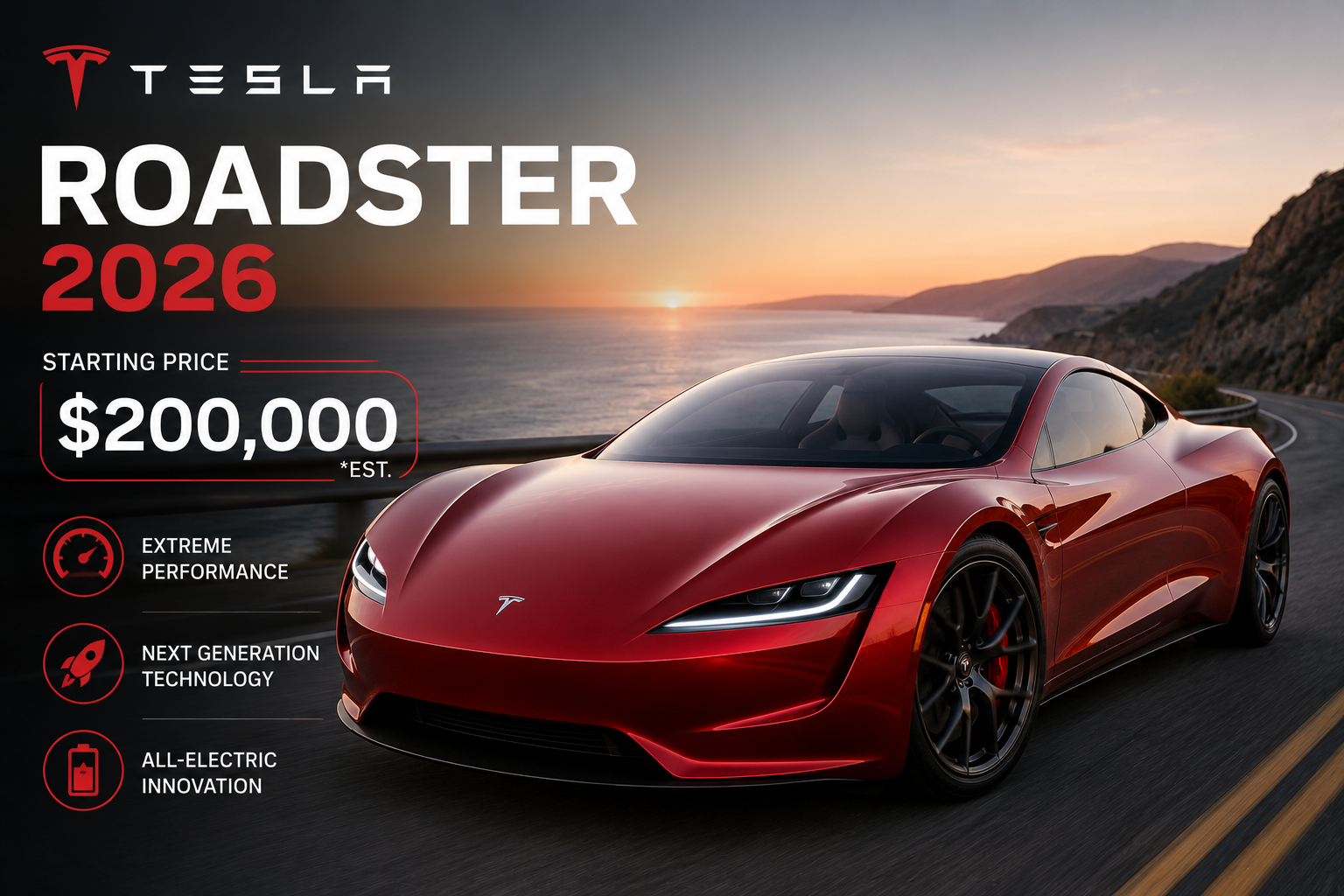
    Tesla Roadster 2026 Price: Estimate, Status, and Buyer Budget

    Why $200,000 is still only an estimate, why a 2026 delivery is doubtful, what Tesla continues to claim, and how much a serious buyer should prepare to spend

    Roadster price fact Current position
    Official US MSRP Not announced
    Current media estimate $200,000 to $250,000
    Tesla Q2 2026 status Design development, with no production capacity or delivery date listed
    Is 2026 confirmed? No. The 2026 label is an editorial model-year estimate rather than a confirmed on-sale year
    Longstanding Tesla claims 1.9-second 0 to 60 mph, more than 250 mph, and up to 620 miles of range
    Body and seating 2+2 coupe with two small rear seats and a removable glass roof
    Final battery and motors Not confirmed
    Reservation status Tesla still displays a reservation path, but buyers should verify current payment and refund terms

    Key Takeaways

    • Car and Driver estimates a $200,000 starting price and an upper figure around $250,000, but Tesla has not published final pricing.
    • Tesla still categorized the Roadster as being in design development at the end of the second quarter of 2026.
    • A normal 2026 retail launch appears highly unlikely because there is no confirmed production specification, EPA rating, or delivery schedule.
    • The original acceleration, top-speed, battery, and range claims remain unverified for a customer-ready production car.
    • A realistic buyer budget should include taxes, insurance, home charging, tires, transport, and the opportunity cost of a large reservation payment.

    The tesla roadster 2026 price is best treated as a $200,000 to $250,000 estimate, not a published Tesla MSRP. The lower number represents the expected entry version, while the upper number reflects the long-discussed premium or limited-edition territory. A final car with a high-performance package, bespoke options, or substantially revised technology could cost more.

    The model year is equally uncertain. Although automotive guides continue to label the car as a 2026 Roadster, Tesla has not announced a 2026 production start or customer-delivery schedule. The absence of final specifications, EPA certification, crash-test information, and a public configurator means buyers should not plan around a 2026 delivery.

    The direct answer

    Use $200,000 as the current entry estimate and $250,000 as an upper planning figure. After taxes and basic fees, an illustrative cash budget is approximately $216,000 to $269,500 before options, insurance, charging equipment, or any performance package.

    Is the $200,000 Price Official?

    No. Tesla no longer displays a final base price on its main Roadster marketing page. The $200,000 figure traces back to the original launch period and remains the most common editorial estimate because Tesla has not replaced it with a new retail price.

    The current Car and Driver Tesla Roadster preview lists an estimated MSRP range of $200,000 to $250,000. It also emphasizes that the second-generation car remains delayed, has not reached its production debut, and still lacks a confirmed powertrain configuration.

    Price scenario Current figure Confidence How to use it
    Official base MSRP Not announced None yet Wait for Tesla pricing before making a firm budget
    Editorial entry estimate $200,000 Moderate Useful for comparison with current supercars
    Editorial upper estimate $250,000 Moderate Reflects limited or higher-spec territory
    Well-equipped buyer budget $225,000 to $285,000 Low Allows room for options, tax, fees, and price changes
    SpaceX-style package Unknown Very low No verified production content or price

    Why a 2026 Delivery Is Doubtful

    Tesla has repeatedly changed Roadster reveal and production targets since the concept appeared in 2017. The most useful current indicator is not another verbal target but Tesla’s own manufacturing-status table.

    Tesla’s second-quarter 2026 investor update still categorized the Roadster as design development and listed its production location and installed capacity as undetermined. That status strongly suggests that regular customer production was not imminent at the end of June 2026.

    This does not prove the Roadster will never arrive. It means the 2026 model-year label should be read as a placeholder used by automotive publications. A 2027, 2028, or later retail model is more plausible, but Tesla has not confirmed any of those years.

    Illustrative Out-the-Door and Payment Math

    The following examples assume a 7 percent sales-tax rate and $2,000 for registration, order, transport, or administrative costs. Actual taxes and Tesla fees will vary, and the Roadster may use a different delivery structure from current Tesla models.

    Estimated vehicle price Illustrative out-the-door total 10% down 60-month payment at 6.5% APR
    $200,000 $216,000 $21,600 $3,804
    $225,000 $242,750 $24,275 $4,275
    $250,000 $269,500 $26,950 $4,746
    Financing is only one part of the budget

    Insurance for an unproven electric supercar, replacement tires, wheel damage, transport, a home charging circuit, registration, and depreciation could add substantially to ownership cost. Obtain insurance guidance before committing to a reservation.

    What the Estimated Price Is Supposed to Buy

    Tesla continues to advertise a 1.9-second 0-to-60-mph time, a top speed above 250 mph, and 620 miles of range. The original concept was also described with a 200-kWh battery, all-wheel drive, four seats, and a removable glass roof.

    None of those major numbers has been verified by an independent instrumented test, the EPA, or a customer-production specification sheet. The final car may be quicker, slower, lighter, heavier, shorter-ranged, or substantially different from the 2017 prototype. Performance claims should remain labeled as manufacturer targets until production testing occurs.

    Claim or feature Current status Buyer interpretation
    1.9-second 0 to 60 mph Tesla claim Plausible only after final tire, launch, and measurement conditions are known
    More than 250 mph Tesla claim Requires production validation and suitable tires
    620-mile range Tesla claim, no EPA rating Likely sensitive to speed, temperature, and performance use
    200-kWh battery Concept-era figure Final battery size and charging curve are unknown
    2+2 seating Concept design Rear seats are likely best for children or storage
    Removable glass roof Concept and current marketing Final storage and weather-sealing details are unconfirmed

    How the Estimated Price Compares With Real Cars

    At approximately $200,000, the Roadster would enter a market containing proven sports cars and supercars that can be purchased now. That creates a high bar because an alternative buyer receives a finalized specification, warranty, delivery date, service process, and independent road tests.

    Current competitor Approximate 2026 starting price Roadster comparison
    Chevrolet Corvette ZR1 / ZR1X $187,495 Available performance benchmark near Roadster estimate
    Aston Martin Vantage $194,500 Traditional V8 grand-touring alternative
    Maserati GranTurismo Folgore $199,690 Available electric grand tourer
    Porsche 911 GT3 $238,150 Track-focused benchmark with proven resale market
    Porsche 911 Turbo S $272,650 More expensive but established and available

    Should You Reserve One?

    A reservation may appeal to a dedicated Tesla collector who accepts an uncertain timeline and wants an early position. For most buyers, the sensible approach is to wait until Tesla reveals the production vehicle, confirms the price, publishes reservation terms, and provides a credible delivery window.

    • Read the current reservation agreement rather than relying on historical deposit terms.
    • Confirm which portion is refundable and how a cancellation must be requested.
    • Consider the investment return lost while a large payment is held.
    • Do not assume a reservation guarantees a price, configuration, delivery date, or production order.
    • Keep funds available for tax, insurance, charging, transport, and a possible higher final MSRP.

    Buy an available alternative instead when you need a sports car within a defined time, require independent performance data, or want a predictable service and resale environment. Waiting costs nothing and preserves flexibility while Tesla continues development.

    Frequently Asked Questions

    How much will the Tesla Roadster cost?

    Car and Driver currently estimates $200,000 to $250,000. Tesla has not announced a final MSRP.

    Is the Tesla Roadster coming in 2026?

    A normal 2026 delivery appears unlikely. Tesla still listed the Roadster as being in design development in its Q2 2026 update.

    Will the Roadster have 620 miles of range?

    Tesla continues to advertise that target, but there is no EPA rating or production-car test.

    How fast will it be?

    Tesla advertises 1.9 seconds to 60 mph and more than 250 mph. Final verified performance is unavailable.

    Is the $250,000 Founders-style version confirmed?

    No current production trim and price structure has been announced.

    Is reserving the Roadster a good investment?

    A reservation is not an investment product and may tie up significant cash without a confirmed delivery date or resale value.

    Final Price Outlook

    The Tesla Roadster remains one of the most ambitious and least certain vehicles in the future-car market. A $200,000 starting estimate and $250,000 upper estimate are reasonable placeholders, but neither amount is official and neither guarantees a 2026 vehicle.

    Serious buyers should prepare for a possible final transaction above the current estimates while refusing to treat concept-era specifications as verified. The next meaningful milestone is a production reveal with final pricing, battery, charging, performance, reservation, and delivery details.

  • 2027 Toyota Tacoma: Confirmed Updates, Expected Price, and Buyer Guide

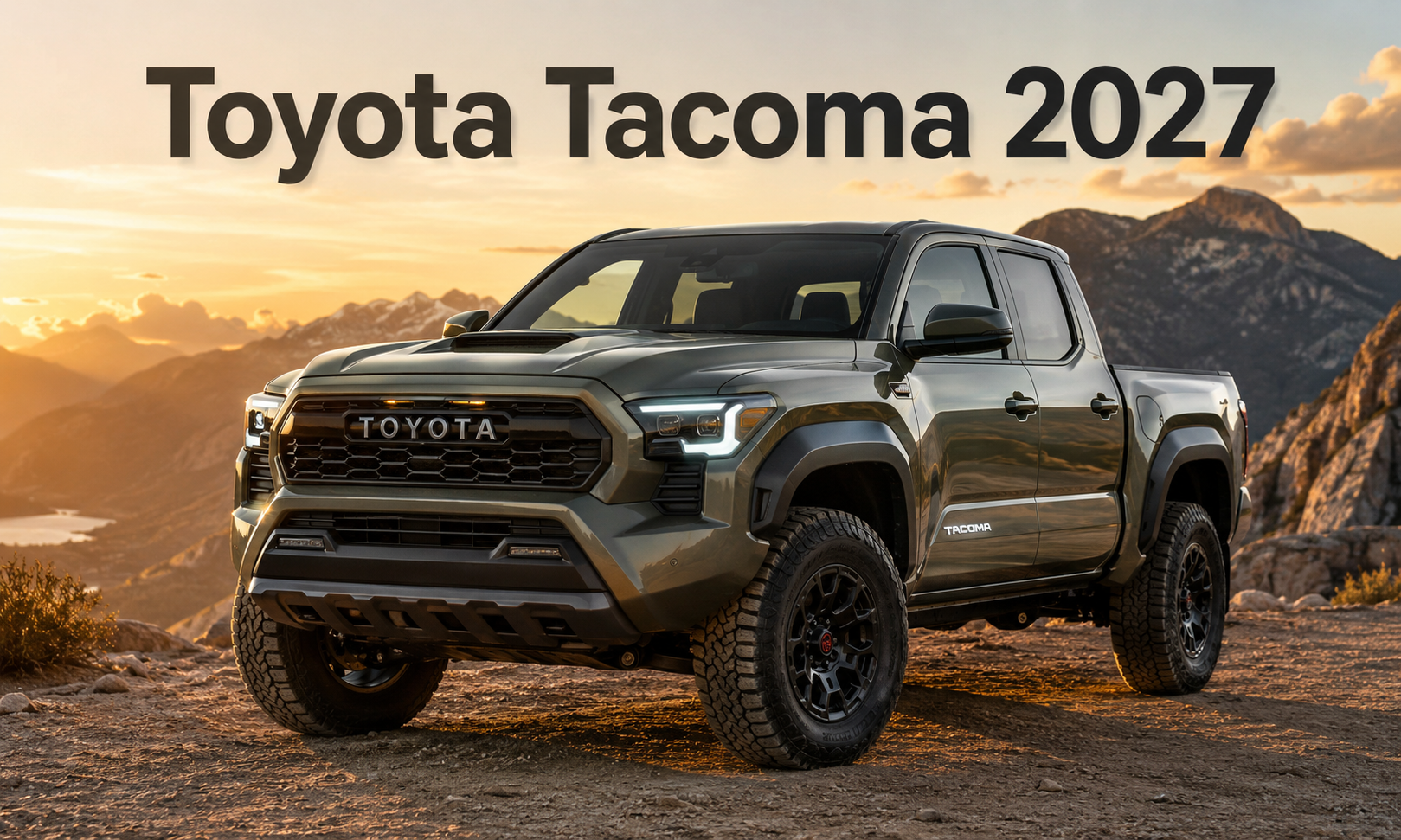
    2027 Toyota Tacoma: Confirmed Updates, Expected Price, and Buyer Guide

    What Toyota has announced, what is likely to carry over, and whether U.S. truck shoppers should wait for the 2027 model

    The Toyota Tacoma 2027 is expected to remain closely related to the fourth-generation truck introduced for 2024. As of July 30, 2026, Toyota has not released complete U.S. pricing or a full model-year specification sheet. The company has confirmed one visible update, however: the Tacoma TRD Pro will be offered in a bold new Honeycomb exterior color.

    That makes the 2027 Tacoma a model-year update rather than an expected redesign. Buyers should anticipate the same broad formula, including turbocharged four-cylinder engines, an available i-FORCE MAX hybrid, rear-wheel drive or four-wheel drive, XtraCab and Double Cab configurations, and a wide range of work, road, trail, and overlanding trims. Final equipment and prices may still change when Toyota publishes the complete release.

    Key Takeaways

    Toyota has confirmed a new Honeycomb paint color for the 2027 Tacoma TRD Pro.

    A major redesign is not expected because the current Tacoma generation was introduced for the 2024 model year.

    The nonhybrid lineup is expected to retain turbocharged 2.4-liter engines with up to 278 horsepower, plus automatic and selected manual-transmission configurations.

    The available i-FORCE MAX hybrid is expected to continue with 326 horsepower and 465 lb-ft of torque.

    Official 2027 Tacoma pricing has not been announced, so shoppers should treat early price ranges as estimates.

    A discounted 2026 Tacoma may be the better value unless a buyer specifically wants the 2027 TRD Pro color or prefers the newest model year.

    What Is Actually Confirmed for the 2027 Toyota Tacoma?

    Toyota’s first Tacoma-specific announcement for 2027 concerns the TRD Pro color palette. Honeycomb is a vivid yellow-orange shade created to give Toyota’s most aggressive off-road trucks a high-impact appearance. Tacoma, Tundra, and Sequoia TRD Pro models receive Honeycomb, while the 4Runner uses a related color called Hot Honey.

    Toyota confirmed the color in its 2027 TRD Pro Honeycomb announcement on July 28, 2026. The announcement also references the Tacoma’s available IsoDynamic front seats, but Toyota has not yet published a complete 2027 Tacoma trim, pricing, or equipment release.

    Topic Status as of July 30, 2026 What It Means for Buyers
    TRD Pro Honeycomb paint Officially confirmed A new model-year-exclusive look for the top off-road trim
    Full trim lineup Not officially published Current grades are expected, but details could change
    Powertrain specifications Not officially published for 2027 Current gas and hybrid systems are likely to carry over
    Pricing Not announced Dealer deposits should not be treated as final pricing
    On-sale date Not announced Late 2026 or early 2027 is a reasonable expectation, not a confirmed date

    Will the 2027 Tacoma Be Redesigned?

    A redesign is highly unlikely. Toyota launched the fourth-generation Tacoma for 2024 on the TNGA-F body-on-frame platform, so the truck is still early in its product cycle. Car and Driver expects the nonhybrid 2027 Tacoma to arrive without major changes, and it similarly expects no significant mechanical revisions for the hybrid version.

    What Engines Will the 2027 Tacoma Likely Offer?

    The current gas Tacoma uses a turbocharged 2.4-liter four-cylinder. Selected configurations also retain a six-speed manual transmission.

    Expected Powertrain Current Output Baseline Transmission Likely Buyer
    Base 2.4-liter turbo 228 hp and 243 lb-ft 8-speed automatic Work-truck and entry-price shoppers
    i-FORCE 2.4-liter turbo Up to 278 hp and 317 lb-ft 8-speed automatic Most everyday and off-road buyers
    Manual i-FORCE 270 hp and 310 lb-ft 6-speed manual Enthusiasts who value driver involvement
    i-FORCE MAX hybrid 326 hp and 465 lb-ft 8-speed automatic Buyers prioritizing torque, premium trims, or serious off-road equipment

    These numbers are based on the current truck and should be treated as the expected 2027 baseline until Toyota publishes final specifications. The hybrid’s main benefit is torque, not a dramatic fuel-economy improvement. It also adds weight and is restricted to higher-priced configurations.

    Will the 2027 Tacoma Hybrid Be Worth the Extra Cost?

    The i-FORCE MAX system combines the turbocharged four-cylinder with an electric motor positioned between the engine and eight-speed automatic transmission. Its 465 lb-ft of torque arrives low in the rev range, which can be useful on steep trails, when accelerating with a load, or when larger tires increase rolling resistance.

    Fuel savings are not the hybrid’s strongest argument. Current ratings reach approximately 23 mpg combined in favorable configurations, which is only modestly better than some nonhybrid versions. Car and Driver also recorded 17 mpg during a 75-mph highway test of the heavily equipped Trailhunter. Buyers should choose the hybrid for torque, equipment access, and off-road trim availability rather than assuming it will behave like a high-efficiency passenger-car hybrid.

    Choose the Hybrid If You… Choose the Nonhybrid If You…
    Want the strongest low-end torque Want the lowest purchase price
    Plan to buy Trailhunter or TRD Pro Need the maximum 6,500-pound tow rating
    Prefer the Limited hybrid’s full-time 4WD Want a six-speed manual
    Value the standard 2,400-watt power supply on hybrid models Prefer a six-foot bed in more configurations
    Accept extra weight and price for added capability Prioritize simpler value and broader trim choice

    How Much Will the 2027 Toyota Tacoma Cost?

    Toyota has not announced official 2027 Tacoma prices. The 2026 model starts at $32,145 before delivery and handling, so a modest model-year increase would be normal. Car and Driver currently estimates a $35,000 to $45,000 range for the nonhybrid 2027 Tacoma page and approximately $49,000 to $67,000 for the hybrid page, but those figures should not be read as an official full trim chart.

    Configuration Early Price Expectation Important Note
    Entry SR or SR5 Low to upper $30,000s Cab, bed, drivetrain, and destination charges affect the total
    TRD PreRunner, Sport, or Off-Road Upper $30,000s to $50,000s Packages can add several thousand dollars
    Limited Likely above many midlevel trims Luxury equipment and full-time 4WD can raise pricing
    Hybrid TRD Sport or Off-Road Around the upper $40,000s and above Hybrid availability begins higher in the lineup
    Trailhunter or TRD Pro Likely in the $60,000 range or higher Top off-road hardware and dealer demand can increase transaction prices

    Which 2027 Tacoma Trim Should You Choose?

    Trim Best Use Why It May Be the Right Choice
    SR Work and basic transportation Lowest expected price and practical configurations
    SR5 Daily driving and light-duty truck use More equipment without a major move into premium pricing
    TRD PreRunner Desert-style recreation without 4WD Rear-wheel drive, locking differential, and off-road appearance
    TRD Sport Road-focused daily use Sport-tuned suspension and broad configuration choices
    TRD Off-Road Best all-around trail value Bilstein shocks, available locking rear differential, and useful off-road systems
    Limited Comfort and technology Adaptive suspension, premium cabin features, and available full-time 4WD
    Trailhunter Overlanding Old Man Emu suspension, protective hardware, 33-inch tires, and available six-foot bed
    TRD Pro High-speed off-road performance FOX shocks, IsoDynamic seats, aggressive hardware, and new Honeycomb paint

    For most recreational buyers, TRD Off-Road is likely to remain the strongest balance of capability and cost. Trailhunter is designed for overlanding equipment and load carrying, while TRD Pro focuses more on high-speed off-road control and visual impact. Buyers who spend almost all their time on pavement may be happier in an SR5, TRD Sport, or Limited.

    What Towing and Payload Numbers Should Buyers Expect?

    The nonhybrid Tacoma currently reaches a maximum tow rating of 6,500 pounds and a payload rating of about 1,705 pounds. The hybrid is rated to tow up to 6,000 pounds and can carry roughly 1,710 pounds in its highest-rated configuration. Final ratings vary by trim, cab, bed, drivetrain, axle ratio, and installed equipment.

    What Will the Interior and Technology Likely Include?

    The current Tacoma offers an 8-inch standard touchscreen and an available 14-inch display, wireless Apple CarPlay and Android Auto, available wireless charging, and an available JBL audio system with a removable Bluetooth speaker. Higher trims can add a 12.3-inch digital gauge cluster, head-up display, heated and ventilated front seats, moonroof, digital rearview mirror, and household-style power outlets.

    What Safety and Warranty Coverage Is Expected?

    Toyota Safety Sense 3.0 is standard on the current Tacoma and includes automatic emergency braking with pedestrian detection, adaptive cruise control, lane departure alert with steering assist, lane tracing assistance, road sign assistance, automatic high beams, and proactive driving assistance. Blind-spot monitoring and rear cross-traffic alert are available depending on configuration.

    The official 2026 Toyota Tacoma overview lists a three-year or 36,000-mile basic warranty, a five-year or 60,000-mile powertrain warranty, two years or 25,000 miles of ToyotaCare scheduled maintenance, and longer coverage for hybrid components and the hybrid battery. Similar coverage is expected for 2027, but buyers should confirm the final warranty guide.

    Should You Wait for the 2027 Tacoma or Buy a 2026?

    Wait for the 2027 Model If… Shop the 2026 Model If…
    You want the Honeycomb TRD Pro color A dealer offers a meaningful discount or favorable financing
    You prefer the newest model year for future resale The exact trim and options you want are already available
    You can wait for final pricing and allocation You need a truck before 2027 inventory arrives
    You are willing to risk limited early availability You want to avoid first-arrival markups or mandatory accessories

    What Should You Check Before Ordering?

    1. Confirm whether Toyota has published final 2027 specifications and pricing for the exact trim.
    2. Choose cab, bed, drivetrain, engine, and transmission before comparing option packages.
    3. Check whether the desired trim uses leaf springs or the coil-spring rear suspension.
    4. Verify towing and payload on the exact configuration, not a general advertisement.
    5. Ask whether the deposit is refundable and whether the dealer charges a market adjustment.
    6. Request a complete out-the-door estimate with every accessory and fee listed separately.
    7. Compare insurance, fuel, tires, maintenance, and financing costs between gas and hybrid versions.

    Frequently Asked Questions

    When will the 2027 Toyota Tacoma be released?

    Toyota has not announced a Tacoma-specific on-sale date as of July 30, 2026. Availability is expected after full specifications and pricing are released.

    Is the 2027 Tacoma getting a redesign?

    No major redesign is expected. The fourth-generation Tacoma was introduced for 2024 and remains early in its life cycle.

    What is new for the 2027 Tacoma?

    Toyota has confirmed Honeycomb paint for the TRD Pro. Additional Tacoma-specific changes have not yet been fully announced.

    Will the 2027 Tacoma have a V-6?

    A V-6 is not expected. The current lineup uses turbocharged 2.4-liter four-cylinder gas and hybrid powertrains.

    Will the 2027 Tacoma still offer a manual transmission?

    Car and Driver expects the six-speed manual to continue on selected nonhybrid trims, but final 2027 availability should be confirmed with Toyota.

    How much horsepower will the 2027 Tacoma have?

    Expected outputs range from 228 horsepower in the base gas model to 278 horsepower in stronger automatic gas versions. The hybrid is expected to remain at 326 horsepower.

    Is the Tacoma hybrid better for fuel economy?

    It offers only a modest improvement in many configurations. Its stronger reason for purchase is 465 lb-ft of torque and access to higher off-road trims.

    What is the best Tacoma trim for off-roading?

    TRD Off-Road is likely the best value, Trailhunter is designed for overlanding, and TRD Pro offers the most aggressive high-speed off-road hardware.

    The Bottom Line

    The 2027 Toyota Tacoma is shaping up as a careful continuation of the current truck. Honeycomb paint for the TRD Pro is confirmed, while the familiar gas and hybrid powertrains are expected to carry over. Buyers should wait for Toyota’s official pricing, then compare it with discounted 2026 inventory before deciding.

  • 2025 Nissan Rogue MPG by Trim and Drivetrain

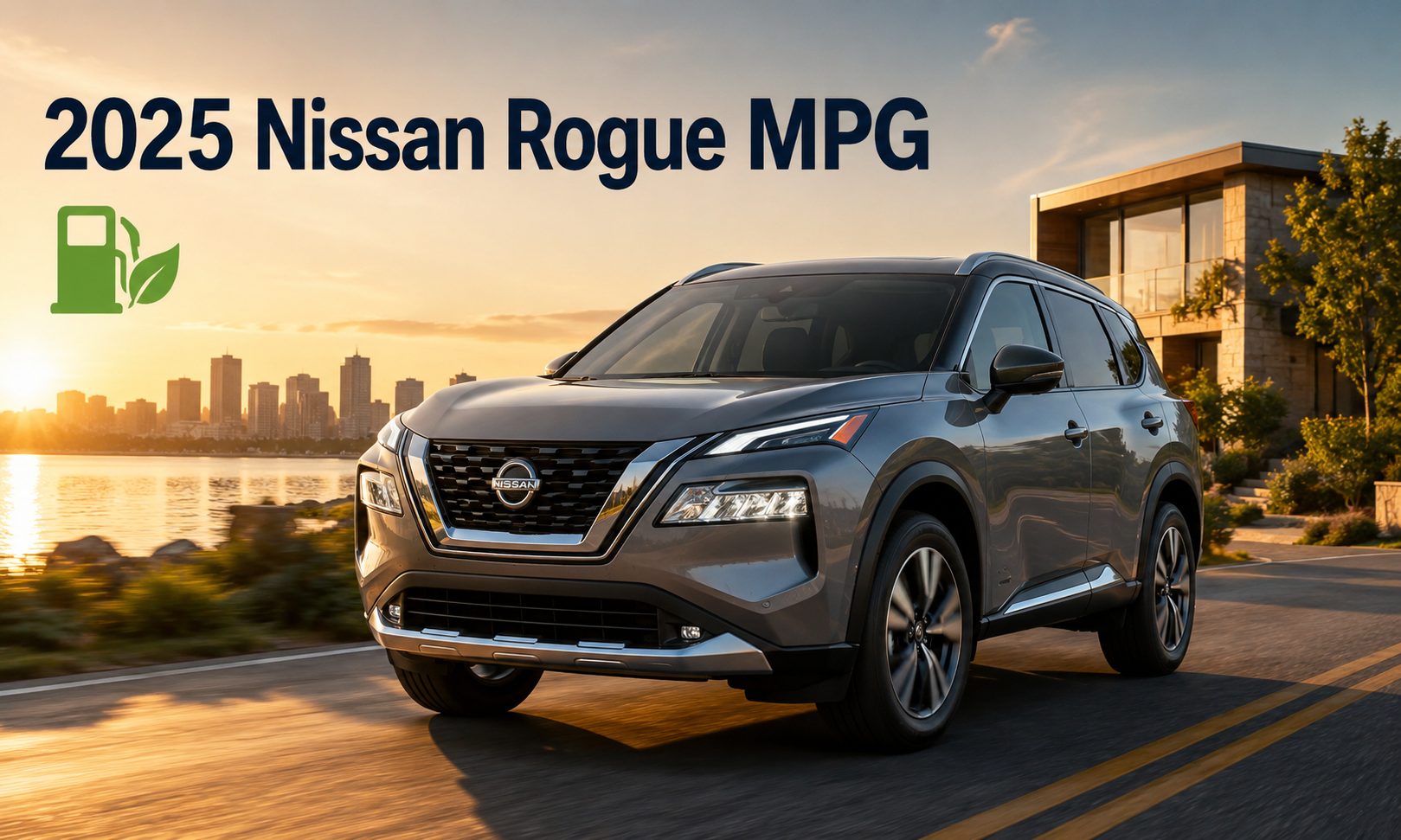
    2025 Nissan Rogue MPG by Trim and Drivetrain

    EPA ratings, real-world highway results, AWD penalties, Rock Creek efficiency, annual fuel use, and ways to improve mileage

    2025 Rogue configuration City mpg Highway mpg Combined mpg Best use
    S and SV FWD 30 37 33 Best overall fuel economy
    S and SV AWD 28 35 31 Snow and wet-weather traction
    SL and Platinum FWD 29 36 32 Upper-trim comfort with good efficiency
    SL and Platinum AWD 28 34 31 Luxury features plus AWD
    Rock Creek AWD 27 32 29 Rugged tires and light-trail capability
    Quick answer

    The most efficient 2025 Rogue is an S or SV with front-wheel drive, rated at 30 mpg city, 37 mpg highway, and 33 mpg combined. Most AWD versions are rated at 31 mpg combined, while the Rock Creek drops to 29 mpg combined because of its all-terrain tires and adventure-focused equipment.

    2025 Nissan Rogue mpg ranges from 27 to 30 mpg in the city, 32 to 37 mpg on the highway, and 29 to 33 mpg combined. The exact rating depends on trim and drivetrain. Front-wheel-drive S and SV models lead the lineup, while the AWD-only Rock Creek is the least efficient version.

    Every gasoline Rogue uses the same 201-hp, 1.5-liter VC-Turbo three-cylinder engine and continuously variable automatic transmission. The variation in fuel economy comes mainly from AWD hardware, larger wheels, additional equipment, vehicle weight, and the Rock Creek’s more aggressive tires.

    Official 2025 Rogue Fuel-Economy Ratings

    Nissan’s official 2025 Rogue brochure lists 30/37/33 mpg for S and SV FWD, 28/35/31 mpg for S and SV AWD, 29/36/32 mpg for SL and Platinum FWD, 28/34/31 mpg for SL and Platinum AWD, and 27/32/29 mpg for the AWD Rock Creek.

    The S and SV FWD versions perform best because they combine fewer heavy luxury features with no rear-drive hardware. Moving to SL or Platinum lowers the rating slightly even with FWD, largely because upper trims add equipment and may use larger wheels.

    How Much Does AWD Reduce MPG?

    Comparison FWD combined AWD combined Annual difference at 12,000 miles
    S or SV 33 mpg 31 mpg About 24 more gallons with AWD
    SL or Platinum 32 mpg 31 mpg About 12 more gallons with AWD

    At 12,000 miles per year, a 33-mpg Rogue uses about 364 gallons, while a 31-mpg version uses about 387 gallons. At $3.50 per gallon, the difference is approximately $82 per year. That makes AWD a relatively modest fuel penalty when the extra traction is genuinely useful.

    AWD does not improve braking on snow or ice, and it does not replace appropriate tires. Drivers in warm climates who rarely leave paved roads will usually save money by choosing FWD.

    Why the Rock Creek Uses More Fuel

    The 2025 Rock Creek is rated at 27 mpg city, 32 mpg highway, and 29 mpg combined. It includes standard AWD, all-terrain tires, a tubular roof rack, hill-descent control, heated seats, and off-road-oriented styling.

    All-terrain tires create more rolling resistance than road-focused tires, and external roof hardware can add aerodynamic drag. The Rock Creek remains efficient for an adventure-styled compact SUV, but buyers who will rarely use its added capability should choose an SV AWD instead.

    EPA Ratings Versus Real-World MPG

    The supplied Car and Driver 2025 Nissan Rogue review reports a 31-mpg result for an AWD Platinum on its 75-mph highway fuel-economy route. That was three mpg below the model’s 34-mpg EPA highway estimate. The Rogue also returned 26 mpg combined during a compact-SUV comparison test.

    Driving situation Likely MPG effect Reason
    Steady 55 to 65 mph highway May approach or exceed EPA combined Low braking and moderate aerodynamic load
    75 to 80 mph highway Usually below highway estimate Air resistance rises quickly with speed
    Short city trips Often below EPA city rating Cold starts and limited warm-up time
    Cold winter driving Lower Warm-up, dense air, heater use, winter fuel
    Roof box or loaded rack Lower Additional aerodynamic drag
    Aggressive acceleration Lower Turbo boost and higher engine load

    Estimated Driving Range

    The 2025 Rogue has a 14.5-gallon fuel tank. Multiplying EPA combined ratings by tank capacity produces theoretical ranges of about 479 miles for a 33-mpg FWD model, 450 miles for a 31-mpg AWD model, and 421 miles for a 29-mpg Rock Creek.

    Real usable range is lower because drivers normally refuel before the tank is empty, and weather, traffic, speed, and cargo change consumption. A practical trip-planning range might be approximately 350 to 430 miles, depending on the configuration and conditions.

    Annual Fuel-Cost Examples

    Configuration Gallons at 12,000 miles Cost at $3.50/gallon Cost at $4.00/gallon
    S or SV FWD, 33 mpg 364 $1,273 $1,455
    SL or Platinum FWD, 32 mpg 375 $1,313 $1,500
    Most AWD, 31 mpg 387 $1,355 $1,548
    Rock Creek, 29 mpg 414 $1,448 $1,655
    Regular gasoline keeps costs manageable

    The Rogue is designed to use regular unleaded gasoline. Paying for premium fuel is not required for the EPA ratings or normal operation, which helps offset the efficiency loss of AWD or upper trims.

    Which Trim Offers the Best MPG and Value?

    The SV FWD is the best fuel-economy and value combination for most buyers. It matches the base S at 33 mpg combined but adds convenience and driver-assistance features that make everyday ownership easier.

    Choose SV AWD when winter traction is worth a two-mpg combined penalty. Choose SL or Platinum for their upgraded screens, cabin materials, and technology rather than fuel savings. Choose Rock Creek only when the tires, rack, and light-trail features are genuinely useful.

    How to Improve Nissan Rogue MPG

    • Keep tires at the cold pressure listed on the driver-side doorjamb.
    • Remove roof boxes and unnecessary cargo when they are not being used.
    • Accelerate smoothly and anticipate traffic instead of braking late.
    • Use cruise control on open, level highways when conditions allow.
    • Follow oil, air-filter, spark-plug, and CVT maintenance schedules.
    • Limit long idling and combine short errands into one warmed-up trip.
    • Check alignment when the SUV pulls or tires wear unevenly.

    Do not overinflate the tires to chase mileage. Excess pressure can reduce grip, worsen ride quality, and create uneven wear. The sidewall number is the tire’s maximum pressure, not the vehicle’s recommended setting.

    Is the Rogue Efficient Compared With Rivals?

    A 33-mpg combined rating is competitive among gasoline-only compact SUVs. However, hybrid rivals such as the Honda CR-V Hybrid, Toyota RAV4 Hybrid, Hyundai Tucson Hybrid, and Kia Sportage Hybrid can return higher combined ratings, especially in city driving.

    The Rogue makes the strongest efficiency argument when a buyer wants a quiet gasoline crossover without paying for a hybrid. High-mileage city drivers should compare total prices and expected fuel savings before deciding.

    Frequently Asked Questions

    What is the best MPG for a 2025 Nissan Rogue?

    The S and SV FWD are rated at 30 mpg city, 37 mpg highway, and 33 mpg combined.

    What MPG does the Rogue AWD get?

    S and SV AWD are rated at 28/35/31 mpg. SL and Platinum AWD are rated at 28/34/31 mpg.

    What MPG does the Rock Creek get?

    The AWD-only Rock Creek is rated at 27 mpg city, 32 mpg highway, and 29 mpg combined.

    Does the Rogue need premium gas?

    No. The 2025 Rogue is designed for regular unleaded gasoline.

    How far can a Rogue travel on one tank?

    Theoretical EPA combined range is roughly 421 to 479 miles, but practical range is lower.

    Why is my Rogue getting less than the EPA estimate?

    Short trips, cold weather, high speeds, traffic, idling, tire pressure, roof cargo, heavy loads, and aggressive acceleration can reduce mileage.

    Bottom Line

    The 2025 Rogue delivers its best mileage in S and SV FWD form at 33 mpg combined. Most AWD versions achieve 31 mpg combined, while the Rock Creek falls to 29 mpg combined because of its tires, AWD system, and rugged equipment.

    For most shoppers, the SV FWD is the efficiency winner and the SV AWD is the all-weather value choice. Real-world mileage may trail the EPA highway number at high speeds, so compare combined ratings and your actual driving pattern rather than relying only on the largest advertised figure.