

A U.S. heavy-duty truck guide to pricing, gas versus diesel, single versus dual rear wheels, towing, payload, model years, recalls, and inspection risks
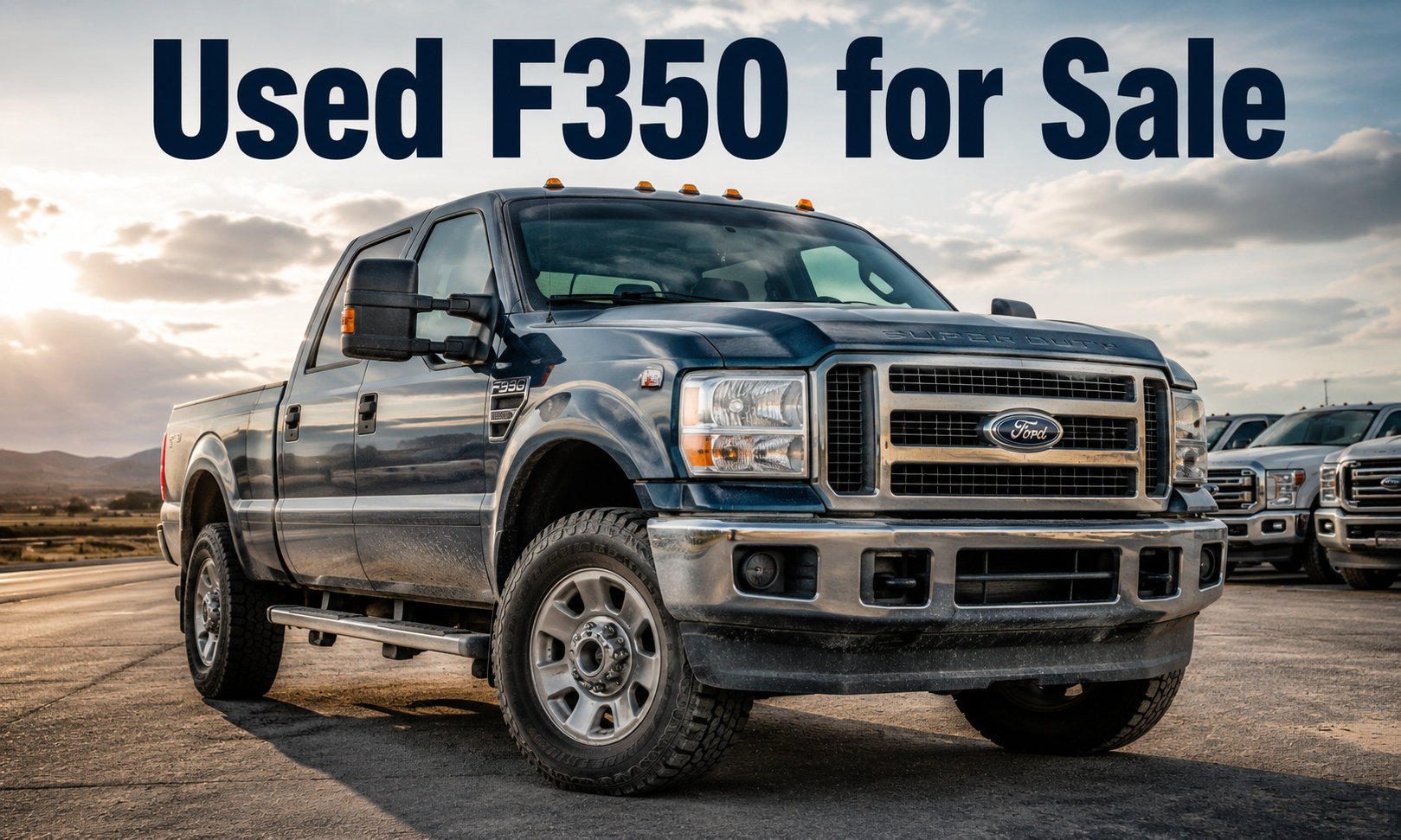
When searching for a used F350 for sale near Wichita, the cheapest listing is rarely the best deal. Ford F-350 prices change dramatically with model year, mileage, cab, bed length, gas or diesel power, single or dual rear wheels, drivetrain, axle ratio, trim, service history, and towing equipment.
Recent Wichita-area listings illustrate the spread. High-mileage older diesel Lariat trucks can appear near the low-$30,000s, 2023 diesel work trucks may sit in the upper-$40,000s, 2024 XLT diesels can reach the mid-$50,000s or low-$60,000s, and low-mileage Limited, King Ranch, or Lariat examples may approach $80,000 to $90,000. Inventory changes quickly, so compare each truck by job capability and condition rather than price alone.
Key Takeaways
| • Start with the trailer, payload, bed, and passenger requirements before choosing a trim or engine.
• A gas F-350 is often the smarter value for lower annual mileage and moderate work, while the diesel is strongest for frequent heavy towing and long-distance pulling. • Single-rear-wheel trucks are easier to park and drive daily; dual-rear-wheel trucks provide greater stability and payload potential but cost more to maintain. • Never use a model-wide maximum towing claim as the rating for a specific used truck. Verify the door label, axle, hitch, cab, bed, drivetrain, and VIN-specific documentation. • Model years 2023 and newer offer the newest technology and power, while 2017 to 2022 trucks can provide stronger value if recalls, emissions equipment, service history, and hard-use damage are checked. • A diesel pre-purchase inspection, open-recall check, and written out-the-door price can prevent repairs or fees that erase an apparent bargain. |
What Job Must the F-350 Perform?
An F-350 is not one product. It can be a two-wheel-drive regular-cab work truck, a four-wheel-drive crew-cab family tow vehicle, a luxury short-bed pickup, or a dual-rear-wheel long-bed hauler. Decide the job before opening listing filters.
| Primary Use | Configuration to Start With | Why |
| Daily driving and occasional hauling | Gas, single rear wheel, crew or SuperCab | Lower purchase and service cost with easier parking |
| Fifth-wheel or gooseneck towing | Long bed, diesel, correct hitch prep, possibly dual rear wheels | Bed clearance, torque, cooling, and stability matter |
| Construction or farm payload | XL or XLT, long bed, payload-focused configuration | Avoid paying for luxury that reduces work value |
| Family plus heavy trailer | Crew Cab 4×4 Lariat or XLT, diesel if towing frequently | Passenger space, towing mirrors, cameras, and comfort |
| Slide-in camper | Payload-first truck selected from the door sticker | Camper weight can exceed ratings before a trailer is attached |
| Luxury ownership | King Ranch, Platinum, or Limited | Premium cabin, but higher tires, electronics, and repair exposure |
Write down the trailer’s loaded weight, pin or tongue weight, passenger count, bed cargo, hitch weight, and accessories. A truck can have enough tow rating but run out of payload when a heavy fifth-wheel pin, people, tools, and fuel are added.
How Do You Decode an F-350 Listing?
Listing titles often omit the details that determine value. A 2023 F-350 XLT Crew Cab can be gas or diesel, short or long bed, single or dual rear wheel, and equipped with very different axle and towing packages.
| Listing Detail | Why It Changes the Purchase |
| SRW or DRW | Affects stability, payload, width, parking, six-tire replacement cost, and registration in some states |
| Regular, SuperCab, or Crew Cab | Changes passenger room, wheelbase, payload, and maneuverability |
| 6.75-foot or 8-foot bed | Long beds are better for many fifth-wheel setups and cargo, but harder to park |
| 4×2 or 4×4 | 4×4 adds traction, weight, cost, and additional driveline components |
| Gas or Power Stroke diesel | Changes torque, fuel cost, service needs, resale value, and emissions complexity |
| Axle ratio and GVWR package | Directly influences towing, payload, acceleration, and highway behavior |
| Factory tow preparation | Can include hitch hardware, trailer brake control, cameras, and bed connections |
Ask for photographs of the driver-door certification label and the original window sticker. The label provides the truck’s actual payload limit after factory equipment, while the window sticker helps identify packages that a dealer description may miss.
Should You Buy a Gas or Diesel F-350?
| Powertrain Choice | Strongest Advantages | Main Ownership Risks |
| 6.8-liter gas V-8 | Lower entry cost, simpler routine service, suitable for many work uses | Less torque and more fuel use under heavy load |
| 7.3-liter gas V-8 | Strong gas torque, simpler than diesel, good for mixed work | Fuel economy and towing range can be limiting |
| 6.7-liter Power Stroke diesel | High torque, strong resale, long-distance towing, exhaust braking | Higher purchase price, oil and fuel-system costs, emissions hardware |
| High-output 6.7-liter diesel | Maximum power for demanding towing | Highest cost and often unnecessary for moderate use |
Diesel makes the strongest case when the truck will pull heavy trailers frequently, cover long distances under load, or work where low-speed torque and exhaust braking reduce driver effort. The premium is harder to justify for short commutes, light trailers, and low annual mileage.
A modern diesel that spends most of its life making short trips can struggle to complete emissions-system regeneration. Before buying, review the duty cycle with a diesel specialist and scan the truck for stored codes, incomplete monitors, tuning, deleted emissions equipment, or repeated forced regenerations.
Is Single or Dual Rear Wheel Better?
A single-rear-wheel F-350 is easier to live with in Wichita traffic, parking lots, drive-through lanes, garages, and narrow job sites. It also requires four rear and front tire positions rather than six total tires.
A dual-rear-wheel truck spreads rear-axle load across four tires and can provide more stability with a heavy fifth-wheel, large camper, livestock trailer, or equipment trailer. The tradeoffs include greater width, more tire expense, rougher unloaded behavior, and more bodywork exposed to curb or parking damage.
| Choose SRW If You… | Choose DRW If You… |
| Drive the truck daily without maximum loads | Carry high pin weight or heavy bed loads regularly |
| Need easier parking and narrower overall width | Value towing stability more than convenience |
| Tow moderate trailers within the exact rating | Need a payload configuration unavailable in SRW form |
| Want lower tire and ownership costs | Accept six tires and wider rear fenders |
Which Model Years Offer the Best Value?
| Model-Year Range | Why Buyers Consider It | What Requires Extra Attention |
| 2011 to 2016 | Lower prices and established 6.7-liter diesel platform | Age, corrosion, emissions repairs, suspension wear, and hard towing history |
| 2017 to 2022 | Aluminum body, modern cabin, broad used supply, strong capability | Recalls, diesel fuel systems, steering, electronics, and modified trucks |
| 2023 to present | Newest generation, stronger technology, updated engines and towing aids | Highest prices, software, expensive electronics, and early-life recalls |
The 2017 to 2022 generation is a useful middle ground because it offers modern comfort and capability without the highest late-model pricing. Trucks from 2023 onward are better for buyers who will use the latest cameras, trailer systems, digital displays, and higher available power.
Age alone does not determine value. A documented 120,000-mile highway tow vehicle can be a safer purchase than a low-mileage truck with tuning, neglected fluids, excessive idling, or severe job-site damage.
How Much Capability Do You Actually Need?
Ford advertises extremely high maximums for the current Super Duty lineup, including up to 40,000 pounds of gooseneck towing and up to 8,000 pounds of payload in specially configured trucks. Those numbers do not apply to every F-350 and may involve another Super Duty configuration.
The official Ford Super Duty overview shows how widely engines, cabs, beds, rear-wheel layouts, axle ratios, and packages change capability. For a used truck, the door label and configuration-specific towing data are more important than the maximum number in an advertisement.
Do not assume modifications increase legal ratings. Air springs, helper springs, larger tires, tuners, and aftermarket hitches may change how a truck feels, but they do not rewrite the manufacturer’s GVWR, axle ratings, or payload label.
What Should You Inspect Before Buying?
- Inspect the frame, hitch, bed rails, receiver, gooseneck ball area, bumper, and rear springs for overload or collision damage.
- Check the engine cold for leaks, warning lights, unusual noises, smoke, rough idle, and evidence of aftermarket tuning.
- Test the transmission under light throttle, firm acceleration, highway speed, and a complete stop-to-reverse maneuver.
- Engage four-wheel drive, low range, locking hubs if equipped, trailer brake controller, exhaust brake, cameras, and towing aids.
- Inspect all tires for matching size, load rating, age, tread depth, sidewall damage, and uneven wear. Check both tires on each dually side.
- Review service records for oil, fuel filters, coolant, transmission, transfer case, differentials, brakes, batteries, and emissions repairs.
- Arrange an independent inspection with a Ford or heavy-duty diesel specialist and request a scan of every control module.
Which Recall Checks Matter?
Recall eligibility is VIN-specific. Certain 2020 and 2021 Super Duty trucks have been recalled for a steering-column concern, while certain 2021 to 2023 Super Duty trucks have been included in a fuel-pump recall. Other campaigns vary by engine, build date, cab, equipment, and software.
Enter the 17-character VIN in the NHTSA recall lookup before paying a deposit. Ask the seller for dealer invoices showing completed remedies, because a clean vehicle-history report does not prove every recall is closed.
Which Trim Makes the Most Sense?
| Trim | Best Use | Why |
| XL | Work fleets, farms, construction, budget towing | Durable cabin and fewer costly luxury features |
| XLT | Best general value | Adds useful comfort and safety equipment without luxury pricing |
| Lariat | Family towing and long-distance use | Better screens, cameras, seats, climate control, and cabin materials |
| King Ranch | Western luxury and towing | Distinctive leather and premium features |
| Platinum or Limited | Luxury ownership | Maximum equipment, but highest purchase and repair exposure |
XLT is often the strongest work-to-comfort balance. Lariat makes sense for frequent long trips and family towing, especially when a 360-degree camera and trailer technology reduce stress. Luxury trims should be purchased because the buyer values their cabin, not because they increase towing capacity.
How Can You Recognize a Strong Deal?
- The advertised configuration matches the VIN, window sticker, and door label.
- The price reflects mileage, condition, trim, engine, wheel layout, and service history.
- The seller provides cold-start access, complete records, and an independent inspection.
- The truck has matching load-rated tires and no evidence of deleted emissions equipment.
- Open recalls are repaired or documented before delivery.
- Dealer add-ons, documentation fees, financing conditions, and warranties are written clearly.
- The truck fits the planned trailer and payload without relying on maximum advertising claims.
Frequently Asked Questions
How much does a used F-350 cost near Wichita?
Current asking prices can range from the low-$30,000s for high-mileage older trucks to around $90,000 for low-mileage late-model luxury versions. Engine, trim, mileage, and configuration create large differences.
Is a diesel F-350 worth buying?
It is most valuable for frequent heavy towing and long-distance work. Lower-mileage owners with moderate loads may save money with a gas V-8.
Is an F-350 dually better for towing?
It can provide more rear-axle capacity and stability, but the exact rating still depends on the configuration. It is wider and more expensive to maintain.
Which used F-350 model years are best?
The 2017 to 2022 trucks offer a strong balance of modern features and used pricing. The best individual truck is the one with the correct configuration, maintenance, recall status, and condition.
How many miles are too many for a diesel F-350?
There is no universal cutoff. Maintenance, idle hours, towing history, fuel-system health, emissions equipment, and inspection results matter more than odometer mileage alone.
Can I trust the dealer’s towing number?
Verify it independently. Use the door labels, axle information, original configuration, hitch rating, and Ford’s configuration-specific towing documentation.
Should I buy a certified used F-350?
Certification can add inspection and warranty coverage, but compare the covered components, term, deductible, exclusions, and price premium.
The Bottom Line
A used Ford F-350 can be an excellent work, towing, and family truck, but only when its configuration matches the job. Compare gas and diesel costs, single and dual rear wheels, bed length, cab size, payload, axle rating, towing equipment, and service history before comparing prices.
For many Wichita buyers, an XLT or Lariat single-rear-wheel truck is the most usable compromise. Buyers carrying high pin weight or heavy campers may need a dually. Whatever the configuration, complete a VIN recall check and heavy-duty inspection before signing the buyer’s order.
