

A U.S. interior walkthrough covering screens, seating comfort, rear-seat room, materials, storage, trunk space, and the best trim for cabin value
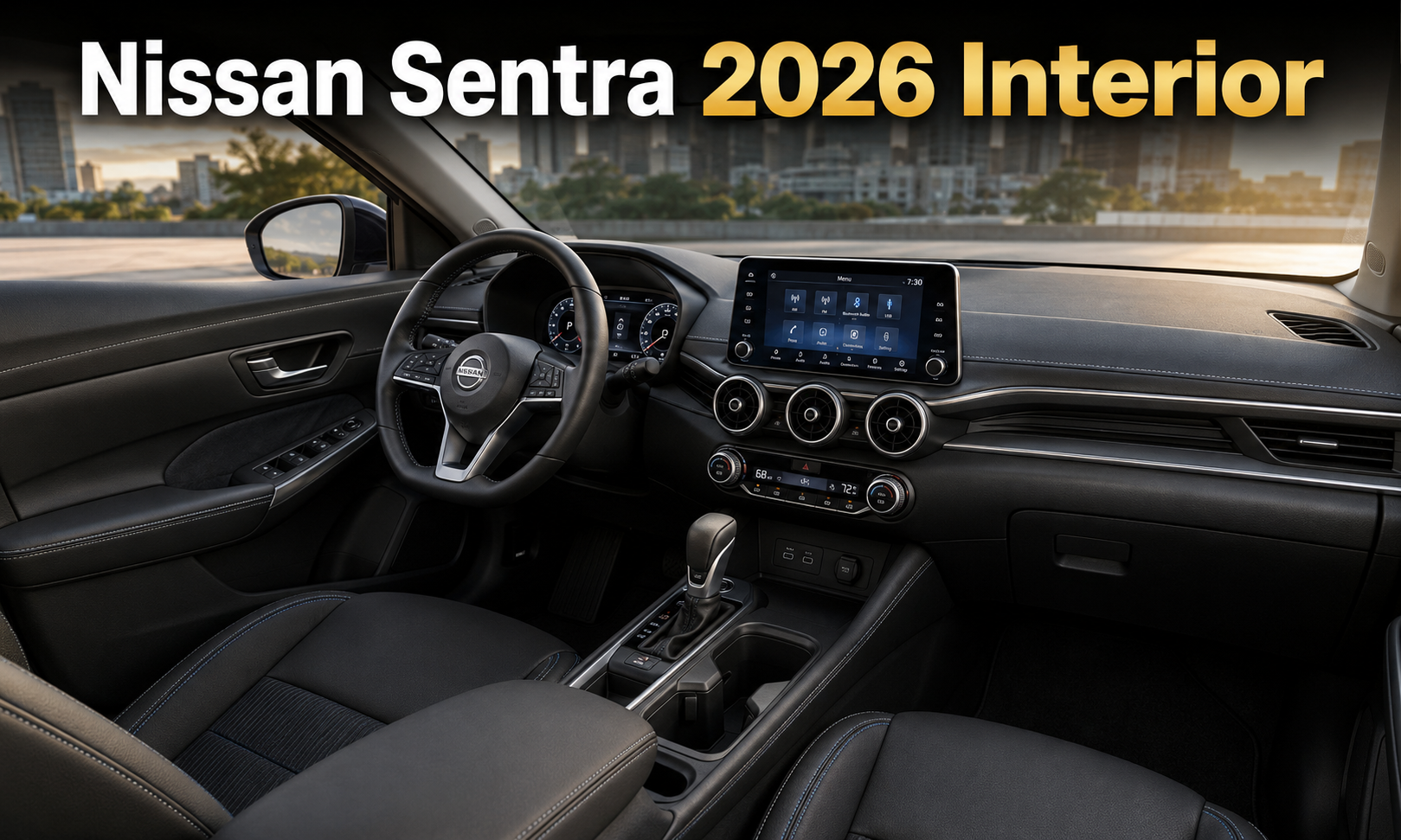
The redesigned Nissan Sentra 2026 interior is the strongest reason to consider the new compact sedan. Nissan keeps the familiar 149-horsepower engine, but the cabin receives a major visual and technology upgrade with a standard 12.3-inch center touchscreen, cleaner dashboard design, improved materials, available dual digital displays, new haptic controls, and a returning SL luxury-oriented trim.
The Sentra remains an affordable compact rather than a true premium sedan, so hard plastics are still visible and the rear seat is not unusually large. Even so, the new interior feels more modern than the outgoing model and offers useful advantages for commuters, small families, first-time new-car buyers, and drivers downsizing from an older midsize sedan.
Key Takeaways
| • Every 2026 Sentra has a 12.3-inch center touchscreen, while SV, SR, and SL add a 12.3-inch digital instrument display.
• Front legroom measures 44 inches, rear legroom measures 34.8 inches, and the trunk holds 14.3 cubic feet. • The S uses cloth seats and a simpler 7-inch driver display, while the SL adds quilted TailorFit upholstery, heated front seats, a heated steering wheel, a power driver seat, and Bose audio. • The new haptic climate-control strip looks clean but may be less intuitive than physical knobs when driving. • The sunroof reduces front passenger headroom by a little more than one inch, so taller buyers should test both roof configurations. • SV is the best budget interior upgrade, SR suits buyers who want a sportier cabin, and SL provides the most complete comfort and technology package. |
What Changed Inside the 2026 Nissan Sentra?
The ninth-generation Sentra replaces the older layered dashboard with a flatter, wider layout. The center screen sits high in the driver’s sightline, the available digital gauge cluster visually connects to it, and the horizontal air vents make the cabin appear broader than its actual dimensions.
Nissan also upgraded surface materials and color combinations. The improvement is most noticeable across the dashboard, door panels, seat designs, and center console. The cabin still contains durable economy-car plastics, especially lower down, but the parts occupants touch most often feel more carefully considered.
A row of haptic controls below the vents manages climate and selected convenience functions. The panel creates a clean appearance and provides vibration feedback when pressed. Some drivers will like the modern look, while others may prefer the certainty of traditional knobs and buttons.
| Interior Area | Previous Sentra | 2026 Sentra |
| Center display | 7.0- or 8.0-inch screen depending on trim | 12.3-inch touchscreen standard |
| Driver display | Mostly analog gauges with smaller information screen | 7-inch display on S; 12.3-inch digital cluster on upper trims |
| Dashboard design | Traditional stacked center layout | Wide monolith-style screen treatment and horizontal vents |
| Controls | More conventional physical buttons and knobs | Haptic climate and shortcut controls |
| Top trim | No SL for recent model years | SL returns with premium seating, audio, and comfort features |
| Cabin atmosphere | Simple and practical | More contemporary materials, ambient lighting, and richer trim choices |
What Is the Driver’s Seat Like?
The Sentra continues to use Nissan’s Zero Gravity seat design, which aims to distribute pressure and support a neutral posture. The front seats feel broad and supportive for an economy sedan, making the car well suited to daily commuting and longer highway trips.
Front legroom measures 44 inches, one of the more generous figures in the compact sedan class. The low dashboard and relatively upright windshield help the cabin feel open from the driver’s seat. Visibility is generally good, although the sloping rear roof and trunk shape still make the backup camera useful.
The standard driver seat is manually adjustable. The SR can add a power seat through its Premium Package, while the SL includes a power driver seat and power lumbar support. Taller drivers should test a car with the moonroof because it reduces front passenger headroom by slightly more than one inch.
How Good Are the Screens and Infotainment?
A 12.3-inch center touchscreen is standard across the lineup, giving even the base Sentra a larger display than many entry-level compact cars. Menus are easier to read, the map and media views have more space, and the screen placement reduces the need to look far away from the road.
The S uses a 7-inch driver information display, while SV, SR, and SL use a 12.3-inch fully digital gauge cluster. Together, the two large displays create Nissan’s monolith-style dashboard. Drivers can view speed, safety alerts, fuel information, media, navigation prompts, and customizable vehicle data.
Nissan’s current U.S. specifications list wireless smartphone integration across the range, but equipment can change during the model year. Check the window sticker for the exact vehicle, especially when comparing early production cars. Three USB ports are standard, and wireless charging is available or standard depending on trim and package.
The current Nissan Sentra specifications and trim comparison lists screen sizes, audio systems, seat materials, convenience packages, interior measurements, and 2026 U.S. pricing for all four trims.
Are the Haptic Climate Controls Easy to Use?
The haptic control strip is one of the cabin’s most noticeable design choices. It looks cleaner than a row of traditional buttons and gives a light vibration when a command registers. The challenge is that a flat panel offers less tactile guidance, so changing temperature or fan speed may require more attention than turning a physical knob.
During a test drive, try the controls while watching the road rather than while parked. Check whether you can quickly adjust temperature, fan speed, defrost, heated seats, and audio volume without searching for the correct area. The design may feel natural after a few days, but buyers who strongly prefer physical controls should compare the Sentra with the Volkswagen Jetta or Toyota Corolla.
How Comfortable Is the Rear Seat?
Rear legroom measures 34.8 inches, which is competitive but not class-leading. Two average-size adults can sit comfortably behind average-size front occupants. A third adult can fit for a short trip, but shoulder width and the center seating position make the rear bench better for two passengers.
The rear seat uses a 60/40 split-folding backrest on every trim. This makes it possible to carry longer items while keeping one rear seating position available. Families should test child-seat installation because the low roofline, front-seat position, and size of the child seat can affect access.
Nissan adds rear side-impact airbags across the lineup. Higher trims also create a more upscale atmosphere through upgraded seat materials, ambient lighting, and better audio, although rear passengers do not receive a separate climate zone.
How Much Trunk and Cabin Storage Is Available?
| Measurement | 2026 Sentra |
| Front legroom | 44.0 inches |
| Rear legroom | 34.8 inches |
| Trunk volume | 14.3 cubic feet |
| Seating capacity | Five |
| Rear seat | 60/40 split-folding bench |
| Car and Driver luggage test | Six carry-ons behind rear seat; 18 with rear seats folded |
The 14.3-cubic-foot trunk is useful for groceries, airport luggage, sports gear, and a compact stroller. Car and Driver fit six carry-on suitcases behind the rear seat, one more than it managed in the Corolla sedan. Folding the rear seats increased the total to 18 carry-ons.
Small-item storage includes door pockets, cupholders, a center console bin, a glove compartment, and phone space near the charging ports. The Sentra is practical enough for daily use, but hatchback shoppers will find easier loading and more vertical cargo space in a Honda Civic Hatchback, Toyota Corolla Hatchback, or Kia K4 Hatchback.
